Palm moth

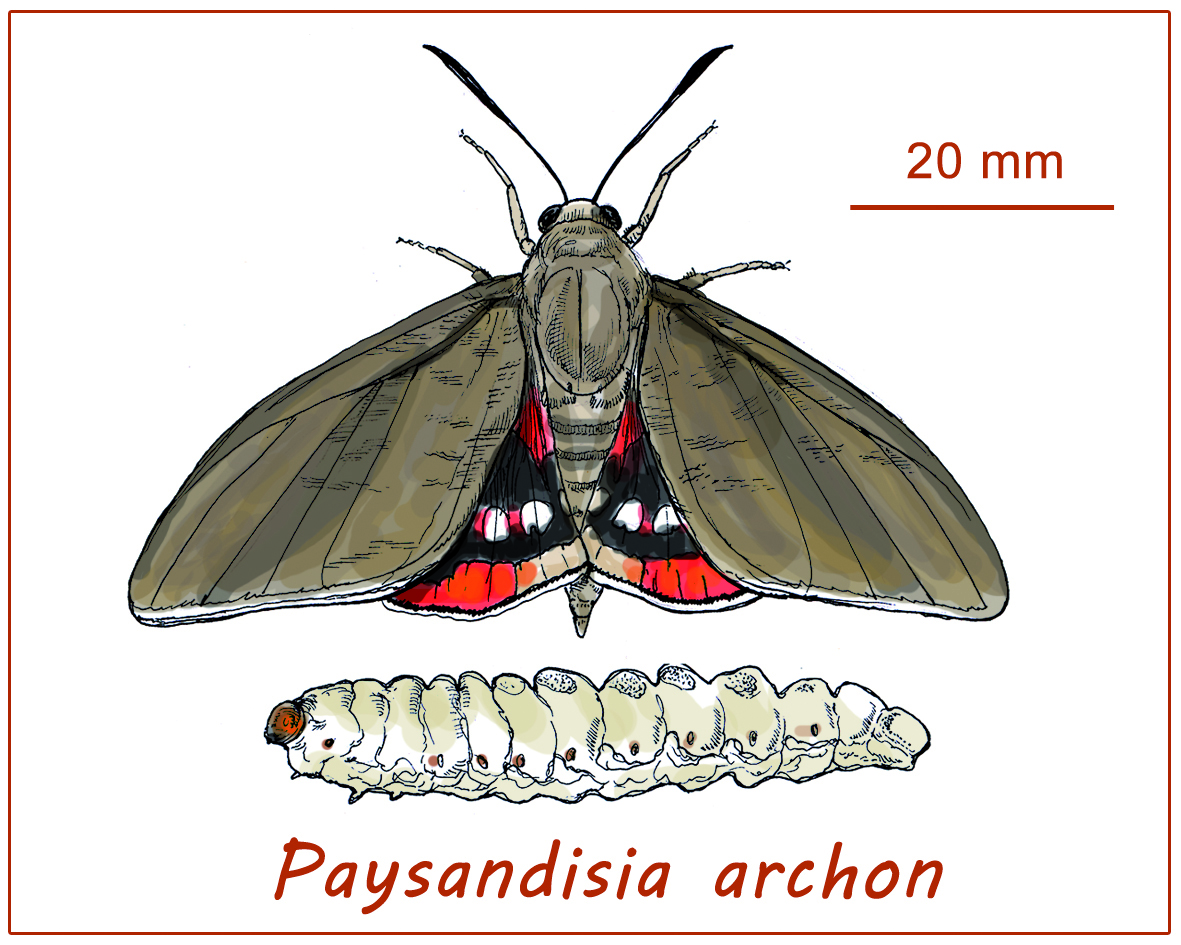
Scientific name: Paysandisia archon

Redness: 80-110 mm

Origin: Uruguay, Argentina, Brazil and Paraguay

Name (ES): Oruga perforadora de las palmeras

Description:


The larva feeds on the internal tissue of palm trees. Signs of infestation include the presence of holes/galleries in the trunk and at the base of palm leaves. Its main host is the Mediterranean dwarf palm (Chamaerops humilis), the only palm tree native to the Balearic Islands.

You can download this informative poster

Siberian silk moth

Scientific name: Dendrolimus sibiricus

Redness: 40-80 mm

Origin: Russia and restricted areas in north Kazajistan, Mongolia, China and Korea

Name (ES): Polilla de la seda siberiana

Description:


A major defoliator of conifer forest masses, the larvae feed on acicles. Conifers include pine, fir and cypress trees. The impact from infestation can lead to death or extreme weakening in hosts.

You can download this informative poster

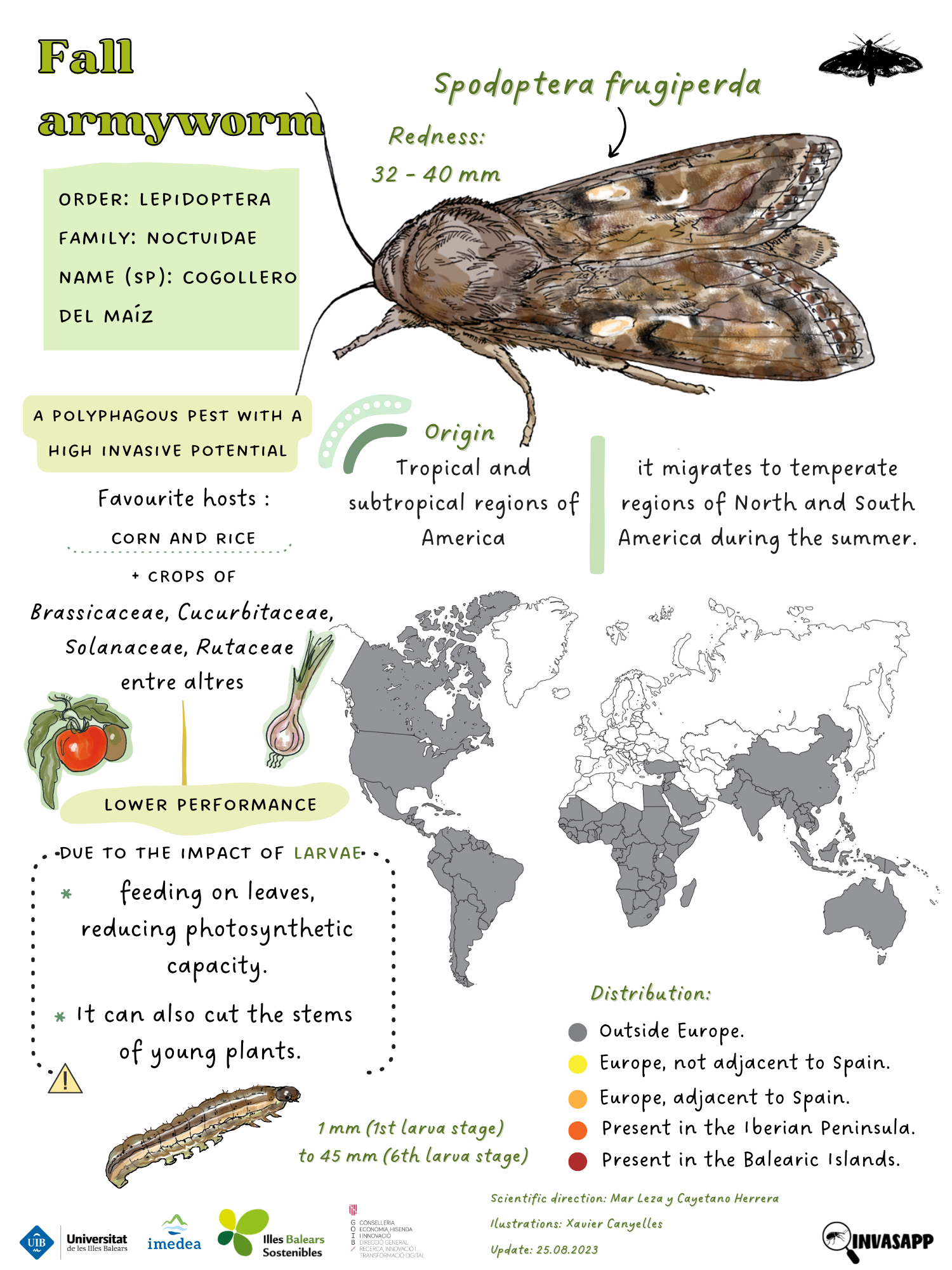
Fall armyworm

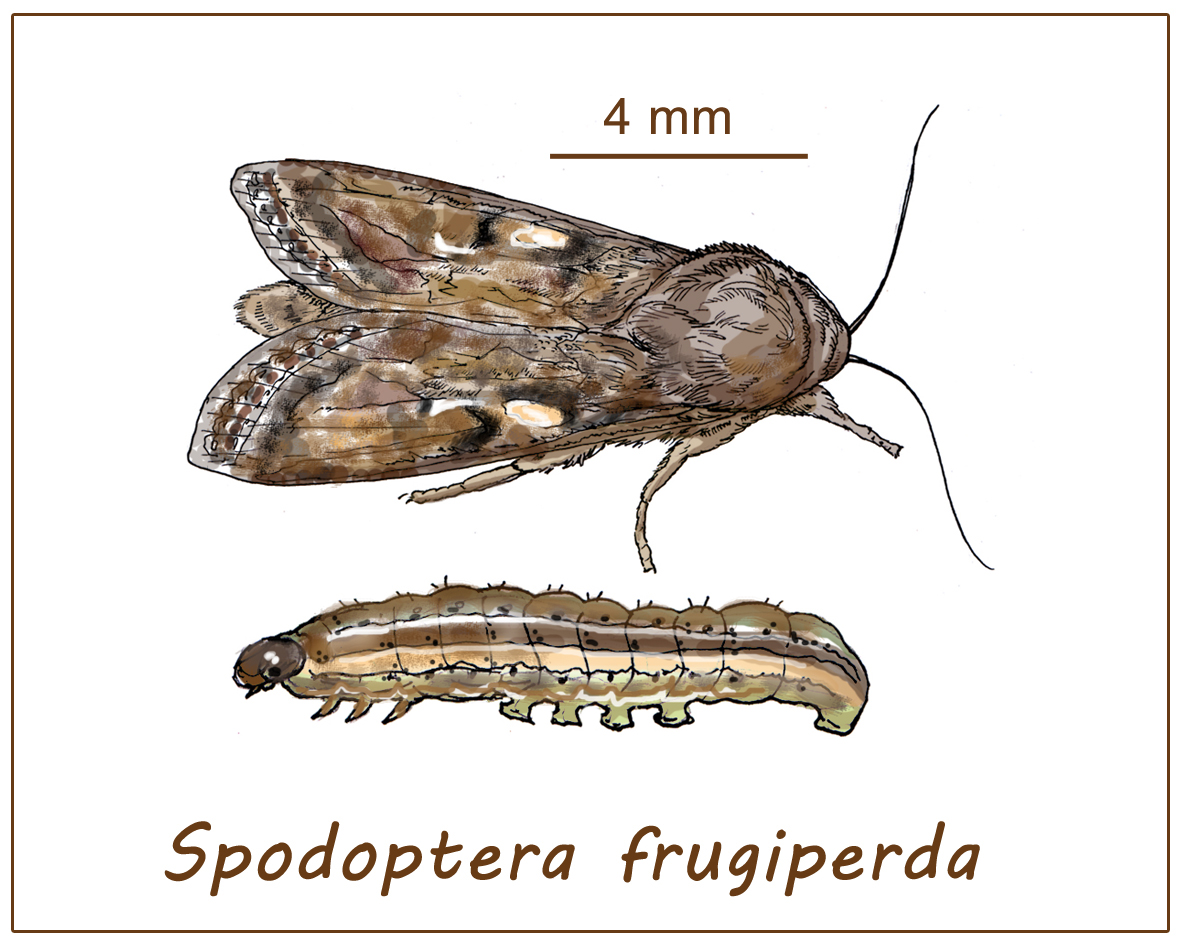
Scientific name: Spodoptera frugiperda

Redness: 32-40 mm

Origin: Tropical and subtropical regions of America

Name (ES): Cogollero del maíz

Description:


A polyphagous pest with a high invasive potential, it migrates to temperate regions of North and South America during the summer. Its favourite hosts include corn and rice, as well as Brassicaceae, Cucurbitaceae, Solanaceae, Rutaceae etc. It causes lower performance due to the impact of larvae feeding on leaves, reducing photosynthetic capacity. It can also cut the stems of young plants.

You can download this informative poster

False codling moth

Scientific name: Thaumatotibia leucotreta

Redness: 60-110 mm

Origin: Subsaharian Africa

Name (ES): Falsa polilla de la manzana

Description:

A highly polyphagous pest with more than 70 hosts in 40 different families, including citrus fruits, pomegranates, peppers and bone fruit trees. The larva penetrates the fruit and feeds on the inside, fostering bacterial and fungal infections, premature maturation, rot and dropping in fruits. It has been intercepted in several European countries, such as Denmark, Spain, Finland, the Netherlands, Italy, Sweden and the United Kingdom.

You can download this informative poster
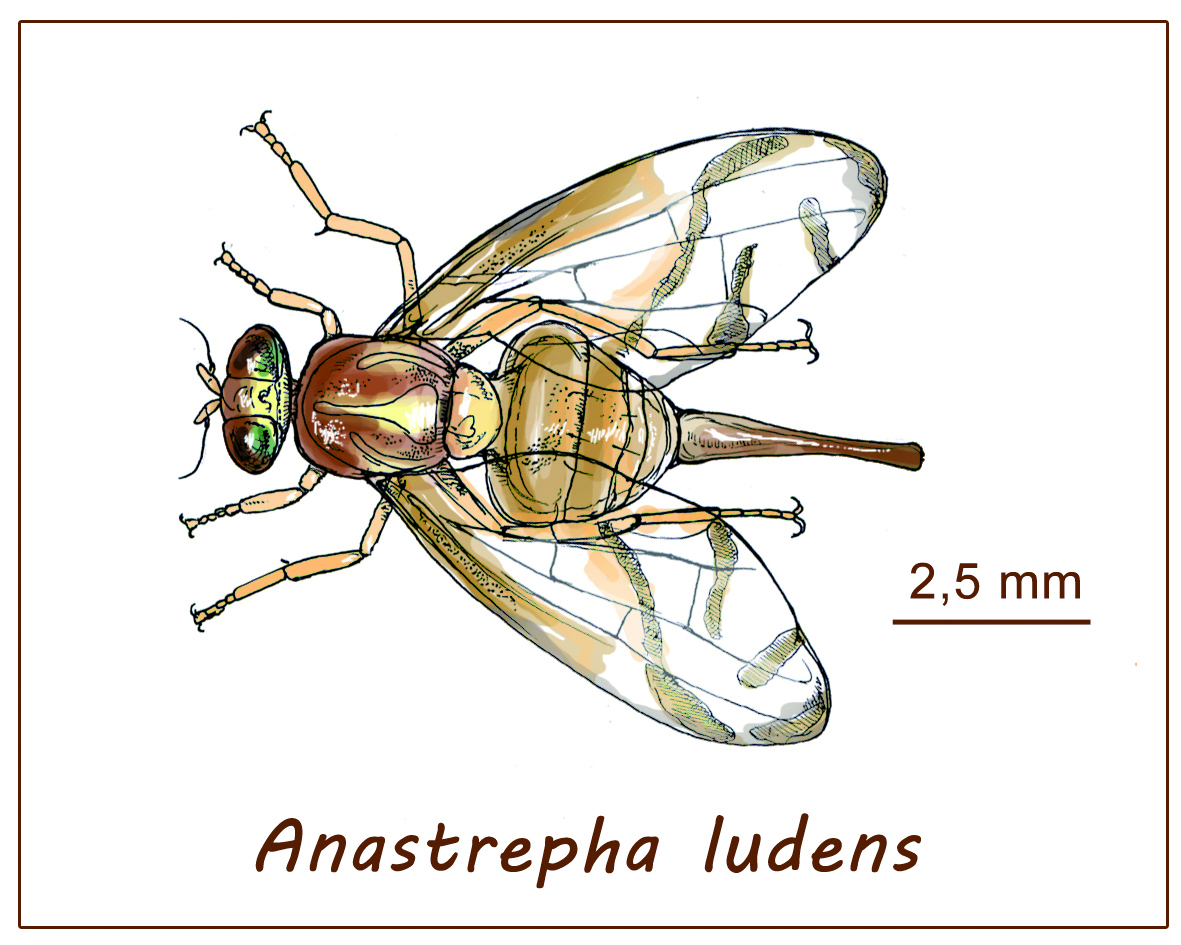
Mexican fruit fly

Scientific name: Anastrepha ludens

Size: 7-11 mm

Origin: Mexico and Central America (El Salvador, Belice, Guatemala, Honduras, Nicaragua)

Name (ES): Mosca mexicana de la fruta

Description:
Historically, A. ludens was a citrus pest, although it has now been proven to affect many other hosts, including mango, guava and peach.

You can download this informative poster